Posts Tagged With: writing tips

Amateur Writing Tips: Paragraphs

I’m in a teaching mood today, so I have decided to share with you my thoughts on paragraph writing. And no, this sudden propensity for wisdom-dispensing has nothing to do with the fact that I have a project due and I don’t want to work on it. Stop judging me!

Paragraph Tip #1 — Long paragraph is loooooong

You know what’s super annoying to read? Really long paragraphs. I’ve picked up so many books that have paragraphs last a page or more, and when I see this, I can’t help but think, “Why? Why you do this?”

I’ll prove my point. Read the following paragraph:

They ran towards me, screaming that the building was going to collapse in mere minutes. I didn’t believe them. I knew for a fact that the donut library in the basement was built on extremely strong foundations that would stand up against even the harshest of earthquakes. Still, nothing is ever set in stone — well, except for the foundations of the donut library. Anyway, I decided that I should take the threat seriously, and considered my options. Flailing my arms and panicking seemed like a good choice. Then I remembered the sabre enthusiast club up on the fiftieth floor. They wouldn’t know about the evacuation. Someone had to help them. That someone, I decided, would be me. I raced for the elevator and hit the button. The doors slid open, and I stepped inside. When I reached the fiftieth floor, I emerged from the elevator and shouted for everyone to follow me down the ground floor. But I was ignored. Everyone was too busy swinging their sabres around to hear me. Desperate to get their attention, I seized a discarded sabre from the floor and leaped into the fray. Knocking aside sabres left and right, I bellowed for them to listen to me, to evacuate before they all perished. Finally, they listened. Like a mindless stampede they raced for the elevator, failing to understand that seventy people could not fit into a single elevator. “Don’t be fools!” I shouted, racing to cut them off before they started squishing each other to death. “We have time! Just wait your turn!” The herd calmed, and through my organizational efforts I managed to get them all safely down to the ground floor. As the last of the sabre enthusiasts tromped out the door, I realized that the building wasn’t collapsing. It wasn’t even shaking. All the panic had been for nothing. I shook my head at my own foolishness. Then I went down to the donut library and checked out a sprinkle donut and a chocolate glazed donut. They were delicious.

That was a stupidly long paragraph. If you managed to get all the way through it, then kudos. The only reason I got through it is because I wrote the darn thing.

In conclusion, keep your paragraphs short. Otherwise your readers will fall asleep and drool all over your book, and as everyone knows, drool stains are like crack for bookworms. And no one likes bookworms.

Paragraph Tip #2 — Conversation: you’re doing it wrong

In this tip, we explore the glorious phenomenon that is an entire conversation between two people taking place in a single paragraph. Because I like writing examples, here’s one to illustrate what I’m talking about:

“Yo yo, G-skillet,” said Mary. “What up dawg?” said John. “Not a whole lot, my homey,” said Mary. “I dunno ’bout you, but I got a mad urge to go do assorted activities that people of our demographic enjoy.” “Dude, me too! We’re like, totally hip.” “Yo, fo sho,” said Mary.

My inability to capture the authentic dialogue patterns of today’s urban youth aside, the main problem with that horrendous excuse for writing is the fact that two different people were talking in the same paragraph. Do you know who was saying what? No? Of course not. That’s because you always, always, always start a new paragraph when someone new speaks.

Let’s apply liberal use of the Enter key and see if we can’t fix up that conversation, shall we?

“Yo yo, G-skillet,” said Mary.

“What up dawg?” said John.

“Not a whole lot, my homey,” said Mary. “I dunno ’bout you, but I got a mad urge to go do assorted activities that people of our demographic enjoy.”

“Dude, me too! We’re like, totally hip.”

“Yo, fo sho,” said Mary.

See how much better that is? Now we know that it’s John, and not Mary, who thinks that they’re totally hip. If we do some mental stretching, we might even deduce that Mary is far more self-aware than she appears to be. In fact, Mary is actually a hipster journalist who has infiltrated a street gang in order to uncover their secrets and write a biting exposé on their daily doings.

Isn’t it amazing what we can discover when we break up our dialogue properly?

Paragraph Tip #3 — In Soviet Russia, Topic Stays On You

For those of you unfamiliar with the In Soviet Russia meme, I am somewhat ineptly attempting to explain that every individual paragraph should have one topic. One topic. Not two topics. Not seventeen bajillion topics. One.

To illustrate:

Of all graceful and magnificent creatures on this great green earth, poodles are truly the most extraordinary. One need only catch a glimpse of their lustrous curly locks as they prance through the grasslands to reach that one, sublime truth: that poodles are physical embodiments of joy. The labrador retriever is the most popular dog in the continental United States. With their fancy footwork and stylish haircuts, poodles cut a striking image wherever they go. Little girls squeal at their approach. Grown men pretend nonchalance whilst secretly wishing they could be as graceful as these canine marvels. Poodles are not just our salvation; they are a way of life.

Did you catch the off-topic sentence? That’s right, it was the sentence about the labrador retriever. This paragraph is about the majesty of poodlesdammit! If the labs want to be praised, they can find their own damn paragraph.

What do you think?

Got any more paragraph-writing tips? Disagree with mine? Agree that poodles are the most glorious creatures in the universe? Sound off in the comments!

Related media of the day:

Click here for more awesome poodle haircuts.

Unrelated media of the day:

Censor’s Warning: This video is awesome, but contains cursing and unsavoury language. Watch at your own risk.

Explanation of Humor: Juxtaposition is amusing.
Categories: Writing | Tags: , , , , , , | 31 Comments

9 Things I Learned From My Copy-Edit

I finished going over my copy-edit this evening. All the changes are made, the manuscript has been sent back to iUniverse so they can do God knows what with it (hopefully publish it, lol), and I officially have nothing more to do with the book until they send me cover proofs and final print proofs. Woo! Talk about a weight off your chest. Now I can focus on other things, like my job, and not living in a forest of cardboard boxes.

But you don’t care about that. You came here for the list!

9 Things I Learned From My Copy-Edit

1. The first paragraph at the start of a chapter is not indented. The same goes for the first paragraph after a scene break.

2. According to American publishing standard, when indicating possession, this — Chris’ — is not correct. This — Chris’s — is correct.

3. A list of adjectives do not require as many commas as you might think. This — fluffy, white hair — is not correct. This — fluffy white hair — is correct.

4. Once you’ve defined a foreign word in italics, you don’t have to italicize it any more. I’m given to understand that you can still italicize it if you want to, but it’s not necessary.

5. Instead of using italics to put emphasis on a certain word, try to let the sentence structure emphasize for you.

6. Ship names are italicized, but a class/type of ship is not italicized. E.g. The Enterprise v.s. Boeing 747.

7. The following dialogue tags — “she panicked”, “she laughed”, “she sighed”, “she smiled” — are not actually dialogue tags. They are verbs that should not be applied to dialogue.

8. Percentage should be written as XX percent — e.g., 97 percent.

9. The correct phrasing is “Far be it from me to say”, not “Far be it for me to say”.

Also, having finished reviewing the copy-edit, I can now officially pass judgement on my copy-editor. Ready?

Was the copy-edit worth $1900?

No. I definitely did not get $1900 worth of editing done to that manuscript. Not by a long shot. On the plus side, I did learn several things (see the above list), so it certainly wasn’t a complete waste of money.

How was the quality of the copy-editor?

He seemed fairly competent. I caught five mistakes overall — four typos, and one word that was randomly bolded. He had a weird obsession with semicolons that I didn’t agree with, and he also seemed to have a vendetta against commas, so I had to add a handful back in. He also failed to notice that some of the chapter titles were misaligned. To be fair, I didn’t notice that either, but still!

Overall judgement?

Not worth the money, but I did learn many new things, so we’ll call it a draw and move on.


Unrelated media of the day:

Categories: iUniverse, Self Publishing, Writing | Tags: , , , , , , , , , , , , , , , | 68 Comments

Writing in the Bathroom

I’ve discovered the ultimate cure for writer’s block. And it’s the simplest thing in the world. Ready?

The Ultimate Cure for Writer’s Block

Keep a notebook and pen in your bathroom.

The Writer’s Block

I’ve been working on the sequel to Imminent Danger for awhile now, and it’s been going … not so well. My problem is that, according to my beta reader, there isn’t enough plot in the second half of the book. Fair enough. What I essentially have right now is tons of plot up to the middle of the story, tons of plot at the end … but for the second half, the characters mostly just traipse around and do irrelevant stuff.

So, obviously I need to change that. And I’ve been making extremely slow progress, but it’s been tough going because I just don’t have any inspiration for it, and I can’t bring myself to sit down and write if I don’t have inspiration. Thus, nothing gets done.

And then I brought a notebook into the bathroom.

The Solution

The first step is to get that notebook and pen into the bathroom. The second step is to take out everything else that could possibly interest you. That includes books, magazines, sudoku puzzles, tablets, etc.

This means that, when you sit down for your daily … let’s call it “relief”, you have absolutely nothing to occupy yourself with other than the notebook. And when a writer has nothing but a notebook and a pen, what else can we do but write?

It’s worked amazingly well. My characters are getting out and doing things, meeting cyborgs, dancing to the alien version of dubstep, etc. Will all of my scribbling make it into the final version of the book? Probably not. But at least I’m writing again! What else can a writer ask for?

Unrelated post of the day

I can’t remember which WordPress blogger directed me to this post, but it was really interesting, and I thought I’d share it here. It’s written by Cassandra Clare, a popular YA author, and she talks about dealing with hate blogs. I didn’t even know there were hate blogs. Clearly I live in a fairyland of butterflies and ice cream mountains. Anyway, here’s the link. 

Unrelated video of the day

For those of you who’ve never experienced the genius of College Humor, here’s a link. And here is one of my favourite comedy sketches/songs by them:

Categories: Writing | Tags: , , , , , , , , , , , | 34 Comments

American vs. Canadian Grammar + Update on Imminent Danger!

We’ll start with the update, since that’s what I’m currently the most excited about. Approximately forty-seven seconds ago, I sent the newly-shortened, vastly-improved manuscript for Imminent Danger and How to Fly Straight into It off to my iUniverse editorial consultant. She will send it on to the Return Evaluator, who will … evaluate it? The name is kind of self explanatory. Anyway, I should be getting the results of my return evaluation back within 7-10 business days.

If everything goes really well, the evaluator will love the new, shortened version, and be so impressed with my flawless grasp on English grammar that she’ll recommend me for publication and Editor’s Choice designation on the spot. In all likelihood, of course, she’ll probably find a few things for me to improve on, and recommend a professional copy-edit. But, as I’ve said before, I’m all right with that. I’m trying the iUniverse route this time, and although it might be expensive, I’m going to wait until I see the finished product before I start forming opinions.

So anyway, the book is finally moving forward, and I’m incredibly excited about that. Yay!

American vs. Canadian Grammar

I’m Canadian, and as such, I use Canadian spelling, grammar, and punctuation. Americans do not use Canadian spelling, grammar, and punctuation. Since I’ve struggled with the conversion, I thought I might share the fruits of my knowledge with you here. Some of the examples are direct Canadian-to-American issues, will some of the examples are just basic grammar know-how that I recently discovered I’ve been doing all wrong.

Alright

“Alright” is not a word. The correct usage is “All right”. Apparently “alright” was used a lot in the old days, but it’s fallen out of proper use now, and therefore we shouldn’t be using it. All right, everyone got that?

Punctuation in Quotation Marks

Consider the following example:

Janine raised her arms in a gesture that clearly meant “come hither”.

Check out the end of that phrase. In Canadian punctuation, that sentence is fine. The phrase “come hither” is self-contained, and the period goes outside the quotation marks. In American punctuation, however, you stick the period inside the quotation marks, as follows:

Robert’s face was screwed up, as if to say “I’ll kill you all with my bare teeth.”

God

I personally think this one is open to debate, but the American grammatical standard requires that the word “God” always be capitalized. Always. No exceptions. If you’re talking about multiple gods or goddesses, that’s all right. But if you are referring to one, all-knowing, all-seeing deity, you capitalize the name.

Oh

This one annoyed me. The basic rule of thumb is that any time you use the word “Oh” — as in “Oh, no!” — you have to put a comma after it. I think it looks silly. I think “Oh yeah!” reads much more smoothly than “Oh, yeah!”. But apparently that’s the standard, much as I am loathe to admit it.

Ellipsis

The ellipsis is, of course, the “…” in sentences. Here are some examples of incorrectly used ellipses:

“He’s so… gorgeous.”

“He’s so…gorgeous.”

In case that didn’t make it obvious, the problem here is the spacing. An ellipsis needs a space before and after. So, the sentence should properly read:

“He’s so … gorgeous.”

If you’ve been skipping the space before the ellipsis, like I’ve been doing, the new spacing is going to look weird. But it’s also the correct spacing, so get used to hitting that space bar!

In conclusion, grammar is annoying.

It occurs to me that only one of those examples actually had anything to do with differences between America and Canada. Oh, well.

Unrelated image of the day:

Source and credit go to: http://imgur.com/RJBcE

Categories: iUniverse, My Works, Self Publishing, Writing | Tags: , , , , , , , , | 56 Comments

How to Write a Novel (in 10 Easy Steps)

Inspired by the 10 Steps To Becoming a Better Writer poster, I have decided to put off my work for another hour or so and instead present you with:

Step One: Learn basic grammar. Seriously. I’m not saying you need to know every in and out of the impossibly complicated English language, but at least know how to form a basic sentence. A general grasp on punctuation and capitalization is also suggested, but not required.

Step Two: Figure out why you’re writing. Is it for fun, or because you’re aiming for eventual publication? What drives your writing spirit? Is this a short-time thing, where your inspiration to write will peter out in a few days, or do you actually have the gumption to sit down and type out an entire book? If a novel sounds like a lot, try a short story first. Maybe writing isn’t your thing after all. If you decide it is your thing, continue to step 3.

Step Three: Figure out what you’re writing. What’s the genre? Plot? Characters? What audience is the book intended for? Where is it set? What are the main conflicts? Are there any conflicts? Go find some conflicts.

Step Four: Read books. Find at least 5 books in your chosen genre, and read them. Take notes. What do you like? What do you hate? What are common elements that run through all the stories? Which characters do you fall in love with? Why do you care about them? Steal all these ideas and ruthlessly exploit them for your own literary success.

Step Five: Buy a notebook. Write down your ideas. Flesh out your characters. Make a plot outline. Sketch a map of the setting. Sketch your characters (stick figures are okay). You don’t have to know every little detail of what’s going to happen in the book, but you need to at least have a vague idea, or else you’re writing blind. And then you’ll just end up writing all over your coffee table or your cat, and that won’t end well.

Step Six: Do research. Unless your book is a memoir of your own life, you’ll need to research at least something. Research can even take the form of reading more books in your genre, or watching television, especially if you’re writing fantasy or sci-fi.

Step Seven: Write the book. This can take anywhere from a weekend to several years. The important things is that you keep writing. You can stop for six months if you want, as long as you come back to the story at some point. Ideas are no good if they stay locked up inside your cranium. Set them free!

Step Eight: Walk away. The first draft of your book is probably terrible, although you won’t think so. When you’ve finished writing it, walk away. Don’t go back for at least a month. By then you should have gained some emotional distance, and will be a bit more able to hack it up into pieces and reassemble it ala Frankenstein’s monster into something that only vaguely resembles the original novel.

Step Nine: Revise. This is the “big picture” step, where you fix all the gaping plot holes and make your mass of text actually resemble a novel. Get your friends or fellow writers to help, if you want. Make your characters more consistent. Fix the climax so that it actually feels climactic. Re-write the middle so it’s not drearily dull. Go through that sucker so many times you’re seeing your characters in your sleep. Don’t develop any emotional attachments to them, however. They aren’t real, no matter how much you wish it were otherwise.

Step Ten: Edit. Time to focus on the little things. We’re talking grammar, spelling, punctuation–which, if you followed step 1, shouldn’t need that much fixing. Run a spell-check. Hire a copy-editor to catch all those typos that inevitably slip through the cracks.

Will your book be perfect? No. But you’ll still have written a book. That’s a big deal. Pat yourself on the back. Then hop back to the beginning of the list (you can probably skip step 1 at this point) and start your sequel, because series sell much better than individual books, and who doesn’t want to be the next JK Rowling? Silly people, that’s who. Are you a silly person? No. Then get writing!

Random link of the day: Chatelaine Horoscope 2012

Since it’s October, I thought it would be fun to see if their “annual” horoscope predictions were even close to being true. The results? Actually not that far off, although the predictions are so vague it’s hard not to be more or less accurate. Anyway, check out your horoscope here.

Random video of the day: Ocelote the Pro-Gamer

It still boggles my mind that people can make a living from playing online games. I might be a little jealous …

Also, his name is amusing.

Categories: Writing | Tags: , , , , , , , , , | 32 Comments

Editing Tips: Keep Track of the Little Things

I wouldn’t consider myself an “expert” editor, but seeing as I’ve spent the last two months of my life editing Imminent Danger, I’d say I’m at least qualified to give out a few amateur tips.

Today’s topic revolves around keeping track of the little things. I’m not talking about punctuation, or spelling, or capitalization. I’m talking about remembering what your character is actually doing. As in, where are they in a particular scene? Are they standing? Are they sitting? If they were sitting and then stood up, are they still standing the next time we hop back to them? Are they holding anything? Do they not have it when they say their next line of dialogue? Where did it go?

Etc.

My biggest faux-pas with this type of thing came not in Imminent Danger, but in a Harry Potter fanfiction I wrote years ago called Harry Potter and the Dream Come True. In the story, I had Harry get magical laser eye surgery so that he wouldn’t need his glasses. I promptly forgot about that, and in the next chapter he was wearing glasses. From that point on, in some chapters he wore them, and in some chapters he didn’t. My readers were furious. They demanded I change it. I had every intention of doing so, but then I went to university and forgot all about Harry and his mysterious disappearing and reappearing glasses. Heck, it’s Hogwarts. There are weirder things there than magic glasses, am I right?

I’m probably not. That’s okay, though. Moving on!

So I’ve compiled a handy list of little things in your book/novella/screenplay/poem that you might want to keep track of in order to prevent inconsistencies and what I call “Reader Rage”. Thus, I present to you:

Keep Track of the Little Things! (a checklist)

~ Position (e.g., sitting, standing, kneeling, crouching, sprawled unconscious on the floor)

~ Attire (e.g., glasses, hat, sandals, muumuu)

~ Appearance (e.g., eye colour, hair colour, height, weight, horrendous disfigurements)

~ Current Mood (e.g., happy, depressed, furious, lustful)

~ Possessions (e.g., weapon, precious heirloom, beverage, cell phone, super-weapon of ultimate destruction)

Okay, I ran out of ideas. But you get the point! You want to avoid an Ascanius situation at all costs. And for those of you who didn’t study Classical Studies extensively and haven’t read Virgil’s Aeneid (so, no one, right?), Ascanius is a kid who varies in age from a toddler to a teenager throughout the story based on what the situation demands from him. One moment he’s leading troops into battle, the next he’s being bounced on Dido’s lap. I’m simplifying things, obviously, but that’s his age problem in a nutshell.

There aren’t enough pictures in this post, so here are various representations of Ascanius in art. Note how he varies from (winged?) baby to teenager to child:

Minor logical consistencies are indeed minor, but they’re still hella annoying if you notice them while reading. So fix them before that happens!

Random link of the day (ultimate troll edition):

Note before clicking: “Ken M” is a person who goes around and posts “troll” comments for his or her own amusement. Other commenters don’t understand he is “trolling”, and react poorly.

http://imgur.com/a/fzpg5


Categories: Writing | Tags: , , , , , , , | 19 Comments

My second VLOG is here!

Oh, teh lulz.

After a great deal of effort, I managed to sit my manager/editor/mother down for that vlog I promised you guys last week. She was reticent at first, but quickly warmed up to the whole vlogging thing. I think she had almost too much fun, to be honest. Well, you can judge for yourselves. Thus, without further ado, my VLOG:

In other news, I have recently acquired a temp job for an internet company. I will be standing in front of a table, handing out magnets and asking random passersby, “Do you have your internet set up for the new school year?” all next week, 9-5. Woot! I have a feeling I will be unutterably bored by the end of the first day, but hey, money is money. And you can quote me on that. At least it’s only a week, lol. And the $400 I make will help me pay for my copy-editing.

Also, my blogger friend Keri Peardon has recently released a new ebook — check it out here. It’s on sale 50% off today, so give it a look see. I haven’t read it yet, but I did read/review two of her novellas, and I really liked them, so I’m guessing Acceptance (her new book) will be good as well.

Random image of the day:

Categories: Blog-related, Self Publishing | Tags: , , , , , , , , , , , | 11 Comments

Musings on dialogue tags

Floccinaucinihilipilificate: to describe or regard something as worthless.

Today’s topic is dialogue tags. In case you haven’t heard this phrase before, a dialogue tag is the “he said” or “she screamed” that goes after a line of dialogue. For example:

“I love you,” she said.

“But our love will never be,” he said.

“How do you know that?” she demanded. “We’re made for each other!”

“No, we aren’t!” he cried. “You’re a human being, and I’m chocolate pudding! The only thing you’re meant for is to eat me!”

“But I don’t even like chocolate!” she wailed.

Etcetera, etcetera. Now, here’s the dilemma. Using only “he said” and “she said” is boring, because they aren’t always just speaking in their normal voices. Sometimes the character needs to bellow, or mutter, or exclaim–it’s like reading an essay otherwise. For example:

“Please don’t kill me!” she said.

“I will consume your flesh and then make love to your extended family,” he said.

“You monster!” she said.

“Oh, you’re one to talk,” he said. “You’re a Lady Gaga fan.”

On the other hand, when a story is riddled down in fancy verbs, the writing gets bogged down. For example:

“Uncle Fred passed away last night,” she bemoaned.

“I had no idea!” he exploded. “How are you?”

“As well as can be, considering,” she ruminated. “Did Dad mention anything?”

“Of course my Dad didn’t say anything,” he belittled. “He’s dead. I’m your cousin, remember?”

I guess the trick is finding a balance between the two. But what’s the right percentage? 60% said, 40% fancy verbs? 30/70? 90/20, if you have poor math skills?

Imminent Danger (my book) is probably about 50/50. My characters get into a lot of emotional situations, so they need emotional dialogue tags. And short of sticking adverbs onto my “he said”s and “she said”s, the only way I can really see to do that is by using fancy verbs.

What’s your fancy verb/said percentage? Extra points if you use poor math skills.

Silly video of the day:

Categories: Writing | Tags: , , , , , , , , | 33 Comments

Guest Blog Post: Tania L Ramos + Giveaway!

Remember that blog tour I mentioned I was taking part in? Well, the day has finally arrived! Today we have with us Tania L Ramos, author of the adult romance/drama Be Still (click here for my review). She’s an extremely talented author who I met over WordPress, and she’s here to share some thoughts with us about how to set realistic, achievable goals.

So here’s what you need to do if you want to be awesome:

1. Read the guest post. I really enjoyed reading it, and I think you will too.

2. Enter the giveaway! Go to Tania’s Facebook page and find the “Blog Tour with Michelle Proulx, Post Comments Here” post (should be easily spotted). Leave a comment saying that you read this blog post, as well as your email address. Then you will be entered for a chance to win a softcover copy of Be StillFor free! Woo!

3. If so inclined, you can also check out Tania’s website. There’s lots of information there about her, her book, etc. Do it!

And so, without any further ado, Tania’s guest post!

Tania L Ramos, author of Be Still

Hello friends of Michelle Proulx and thank you for following my blog tour.  My name is Tania L Ramos, author of two books titled, “When I Thought I Was Tough,” and most currently, “Be Still.” By day I am a registered nurse in a recovery room.  By night I punch away at my keyboard and put on my author hat.  Currently, I am a marketer, publicist, and social media novice all for my most current book.  Most importantly, I am an independent  author and that has been the scariest part.

Like so many others, I dreamed of being published and getting paid for what I love to do.  Then I discovered that was like saying I wanted to be an award winning actress in Hollywood.  Well, I had my fifteen seconds of Hollywood fame when I played (in a non-speaking roll) a paramedic for several episodes of the television show E.R.  I was never discovered and, so, I went on into my role of being a real medical professional then chose to  start writing during a very bleak period in my life.  That bleak period is a whole other story, one of those Hallmark television after-school specials.

With my time off I wrote my first novel.  I thought I would have been happy at that, but all that did was spark a great fire for the desire to be an accomplished author.  What is accomplished? I had a few goals in mind went I  decided to independently publish, “Be Still.”

Goals:

1. Have a professional looking book (accomplished)

2. Have a book signing (accomplished)

3. Reach a rank of less than 1,000,000 on Amazon (accomplished…for a few hours)

4. Have a book party (accomplished)

5. Have a book trailer up (accomplished)

6. Have an author video interview up (accomplished)

7. Do a blog tour (in process of being accomplished)

8. Sell 250 book by August 31,2012 (short about half, but there’s still time)

My guest post today is about having goals and making them realistic. Sure, I would love to be a NY Times Best Seller and have a company pay me to write instead of investing my own money to write, but it takes baby steps.  There are many authors out there who started out self-published and eventually won out the big publishing houses, but even those authors would say they had to first pay their dues. Never, or at least rarely, do things come without working at it first.

I have paid over $6,000 into being published. And I do not mind saying that. There are many authors who refuse to reveal numbers, but I’m here to state the truth, so other authors going this route know they aren’t alone. Over $6,000 in publishing and at least another $2,500 in marketing and publicity.  I have tried it all.  I made a commitment to put any money I make back into marketing or into publishing my next book.  I didn’t expect to  make a profit, but wouldn’t scoff at it should that happen.  I am a relatively unknown author and have prepared myself to pay my dues.

I set goals first off, and placed them on a blackboard in bright shiny colors to see every morning.  The list above are just some of my goals, there are many more: send out a press release, create a Facebook fan page, start using Twitter, etc.  Every day I set out to complete one task and called it an accomplishment.  I celebrated every minor milestone such as hugging the woman who had no clue who I was but bought my book at the mall anyways.  What was all the hubbub? Someone who didn’t know me from Eve bought a book! To me that was a major ordeal. When I sold my first ten books I shouted for joy and posted it to every social media outlet I could.  Again, it wasn’t the 250 by August, but it was a milestone on my way to the bigger picture.  I celebrate everything so nothing too small can ever be a disappointment.

A few weeks ago I did a book signing at High Desert Oasis Used bookstore’s grand re-opening event.  I sold one book.  Just one.  I called it a bonus day.  You know why? The guy who bought my book met me at the mall the  week before and promised he would show up to the bookstore for my signing event. And he did.  That was one of the most special books I have sold yet.  And still, I only sold one book that day.  It wasn’t so much the sale as knowing he came back to see me because he was very curious about the book. Milestones.

This blog tour has been such a huge ordeal for me.  I didn’t know many people before writing my book.  In fact, I could name all my friends on one hand.  I’m socially awkward and a great savant at being perpetually recluse.  Thusly, I write.  So creating a book tour took so much time and emotional energy.  I had to start networking, start putting myself and my emotions out there, and start speaking up.  Some of you may empathize.

I was turned down by five people whom I invited to join my blog tour.  I was psychologically devastated and emotionally mortified.  But in between all those rejections were acceptance replies. I told myself I would do the tour even if just one person accepted.  Just one.  I had five people accept.  Instead of wallowing in devastation I celebrated my accomplishment.  FIVE PEOPLE ACCEPTED.

Not only am I hitting milestones and accomplishing goals, but I’m changing who I am.  I can talk to people about my book.  And conversely people are asking me questions.  I have joined clubs and volunteered to do speaking events.  People are contacting me now.  But everyday, I still create and reach for goals.  Today I am coming to you from Las Vegas, Nevada where I am working on another goal: research, video and photos of the Extraterrestrial Highway for my next book (based on aliens for young adults).  There is always a goal…

I feel like a superstar and so should you in every minor and major accomplishment. Hug the lady who buys your book and has no clue who you are. Let them know they are superstars in your world.  Rejoice in the person  who remembers who you are and comes back.  Be delighted if only one person accepts your request to host a blog tour, but jump to the sky if you get five.  Take a picture of the moment you sell ten books, twenty-five, fifty and finally hit your goal.  Never, never, never look at a goal as missed but look at it as an extended journey.  Books are forever.  It may take twenty years to hit a goal, but don’t forget to shout out loud on the day you hit that mark.  Never lose sight of your dream, because nobody else can dream it for you.  And when you reach that goal, after the celebration, make a new one. And if you can’t be among the stars…write about them.

–Tania L Ramos

Did you enjoy the guest post?

Sound off in the comments below!

And don’t forget to check out her blog tour stop yesterday at DavidMcGowanAuthor.com. Tomorrow she’s posting a video blog on Youtube, so stop by her Youtube channel to see that!

Categories: Blog-related, Self Publishing, Writing | Tags: , , , , , , , , , | 7 Comments

Another awesome free eBook about self-publishing …

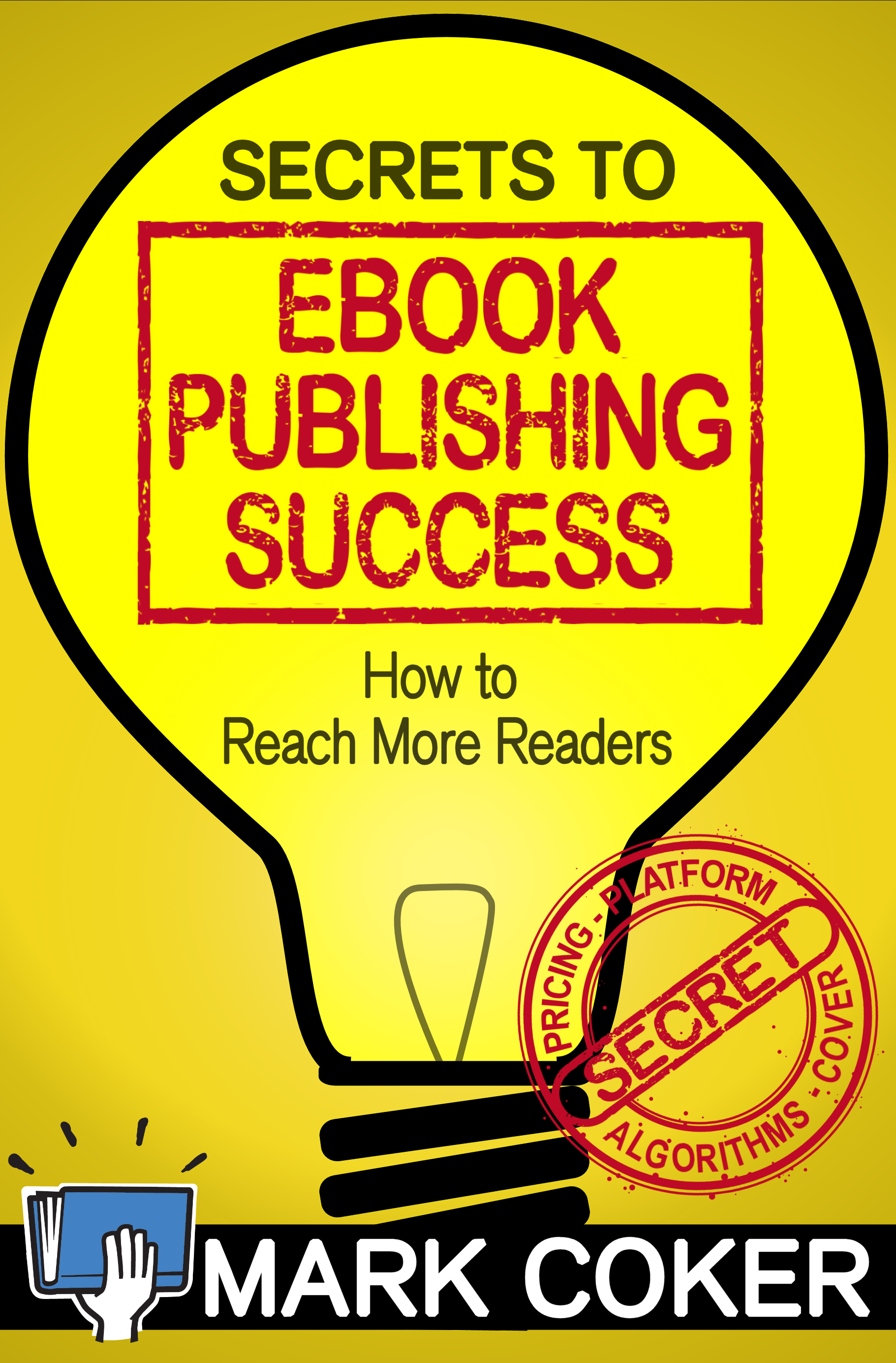
You may recall that post I wrote about the “Free Marketing Tips” eBook. Well, today’s post is about the same author, Mark Coker, who started Smashwords and has written yet another eBook about self-publishing that has some very useful information for anyone who has ever, is currently, or will ever self-publish.

The eBook is called “Secrets to eBook publishing success”. Here’s a link to the download page. And it’s totally free, so if that isn’t reason enough to read it, then I don’t know what is!

There’s lots of useful info in there. I’ll share some here so you get the idea (note: these are quotes directly copied from the eBook):

  • 80% of your book’s success will be determined by the quality of your book. The other 20% is distribution, marketing, and luck.
  • A good author name is simple to remember, and simple to spell. Avoid cutesy spelling, because this can make it difficult for readers to find you.
  • Think of each book you release as a fish hook in the ocean. When you network them together with simple mentions and hyperlinks at the end, the fish hooks form a net. Each book becomes a subtle yet powerful advertisement for the others. Each gives you the opportunity to reach new readers.
  • (Giving your eBook away for) free works best if you have a deep backlist or if you write full-length series.
  • Ebooks are immortal. They never go out of print or lose distribution unless the author or publisher willingly decides to remove a book from distribution. Your sales can start off small then gradually build over time as readers start discovering and enjoying your books.
  • Your book is your most effective marketing tool. Write a book that touches the reader’s soul and the reader will market your book for you through online word-of-mouth and reviews.

There’s loads more information in there. Again, here’s the link to download the eBook.

Fun time!

Categories: Self Publishing | Tags: , , , , , , , , , | 6 Comments

Blog at WordPress.com.