Posts Tagged With: self-publish

Short Story Contests 2012

I found this amazing article that lists about a gazillion upcoming short story contests. If you have ever or ever intend to write a short story, you should check out the link, because there are a heckuva lot of lucrative contests upcoming!

NOTE: As always the case when giving away your intellectual property and your money, double check and make sure the contest is legitimate before entering.

Awesome of the day:

FYI, the entire video was done in one take, so the performers basically ran around the house setting themselves up for their next appearance on camera. There was a girl whose sole job was to toss instruments to the performers. There’s a link at the end of the video to the Behind the Scenes video, if you’re interested.

Image cred: http://www1.cse.wustl.edu/~faanly/miscellaneous.htm

Categories: Writing | Tags: , , , , , , , , , | 3 Comments

Amateur Writing Tips: POV (Point of View)

Plots and characters are undoubtedly important things to consider when writing a novel. I would argue, however, that POV is even more crucial. This is because if you screw up the POV, no one will even think about reading your book, regardless of how great the plot or characters are.

I’ll prove my point. Read the following paragraph:

You walk toward me, hips swaying as your silky black stilettos clack on the marble tiles. Bradley sits casually at the bar, considering what to say to the beautiful woman approaching him. She’s way too good for him, thinks the bartender. I eat up the luscious man lounging at the bar with my eyes. “What can I get you?” asks the bartender.

Has your brain exploded yet? That’s because of all the shifting POVs. For the record, the POVs in that paragraph went as follows: second-person → third-person → first-person → third-person. Ack, I say. Ack.

But there is a solution! I like to call it the “Know your POVs so you don’t explode your reader’s brain” solution. It’s my understanding that brain-explosion is frowned upon, so you might want to avoid doing that if at all possible.

Without any further ado …

Michelle’s Guide to POV

First Person

For first-person narration, you essentially write the story from the perspective of one of your characters. One of the best examples of this POV is in the Hunger Games series by Suzanne Collins. The story is told from Katniss’ POV, meaning we only get her perspective. If something happens that she doesn’t know about, we don’t know about it either. First-person limits you to what a single character is experiencing, but it also allows you to delve deep into the mind of your protagonist, which can be a very powerful addition to your story.

Example:

I don’t know why, but there’s something about him that enthrals me. Maybe it’s his smooth skin and his tousled ebony hair. Maybe it’s the way he says my name, like smooth bourbon sliding over my lips. Maybe it’s because he’s a vampire who has literally enthralled me with his sinister vampiric powers. Whatever the reason, I know that I must have him. Right now. On the dirty concrete floor if necessary. Although a bed would be preferable. Pillows are probably more comfortable than concrete.

Second Person

Second-person narration is where you write like you’re talking to the reader–sort of like what I’m doing right now. You find second-person a lot in those Choose Your Own Adventure books, although Wikipedia claims that there are multiple famous authors who have used this POV. Clearly I need to read more, because I’ve only heard of one of those people. Anyway, second-person isn’t used very much in books, so you probably shouldn’t use it either. Unless you want to. In which case, go nuts. Just don’t expect me to read it.

Example:

You watch the wave flow gently up the beach. The cool water laps at your toes, making you shriek with delight and jump back. Then the wave retreats, and you scurry forward again, wondering how far you can get down the wet sand before the water returns to claim you. But you misjudged, and the wave rushes toward you, covering you up to your thighs. Your pants dissolve, and you are suddenly standing on the beach wearing nothing but your underwear. You probably shouldn’t have worn cotton candy pants to the beach, no matter how trendy the salesperson said they were.

Third Person

Third-person is the most common POV style. It’s told from an outside perspective, and all the characters are referred to by their name, or by “he”, “she”, or “it”. JK Rowling’s Harry Potter series is written in third person, as is the Game of Thrones series by George RR Martin.

The two big types of third-person POV are third-person limited and third-person omniscient. Third-person limited is from the perspective of one character; the third-person omniscient narrator knows all and sees all.

Example:

Harmony bowed to the crowd, who applauded madly. Then she began the dance. First she twirled, then she flipped, then she did an acrobatic spin that nearly spun her right off the stage. The roaring of the crowd grew louder. Encouraged by their support, Harmony gathered her nerves for the final act. Balancing on her tail, Harmony built up the fire in her lungs and then let it shoot forth from her mouth in a multi-coloured inferno of flame and heat. But she overshot the target dummy. The flames splashed onto the flammable tent walls, igniting the fabric and inciting mass panic in the crowd. “Please, don’t panic!” Harmony pleaded, trying desperately to put the flames out. “I’ll fix it! Don’t leave!” But no one understood her, because Harmony was a dragon, and dragons can’t speak English.

There are pros and cons to each of these. I personally prefer third-person limited, because restricting the POV to one character leaves you room to do big reveals–e.g. that Harmony is a dragon. However, third-person omniscient lets you get into all the character’s heads, which can be great–except that if you reveal what everyone is thinking, it kind of takes away some of the mystery.

First-person is more like writing a diary, in that everything–descriptions of places, characters, interpretations of events–is from that character’s POV. I’m actually writing a book right now in first-person, the first time I’ve attempted this POV, and it’s going pretty well. I like being able to get into my character’s head and see the world through her eyes, but it also prevents me from showing the reader what the other characters are going through, which can be restrictive at times.

But as always with writing, the choice is ultimately up to you.

What do you think?

What’s the best POV? What POV are you writing in right now? Are there certain POVs that work better with different styles of writing? Is there any POV you hate?

Image cred: http://siennanorth.blogspot.ca/2012/05/point-of-view-demystified.html

Categories: Writing | Tags: , , , , , , , | 57 Comments

8 Things I Learned from my Proofreaders

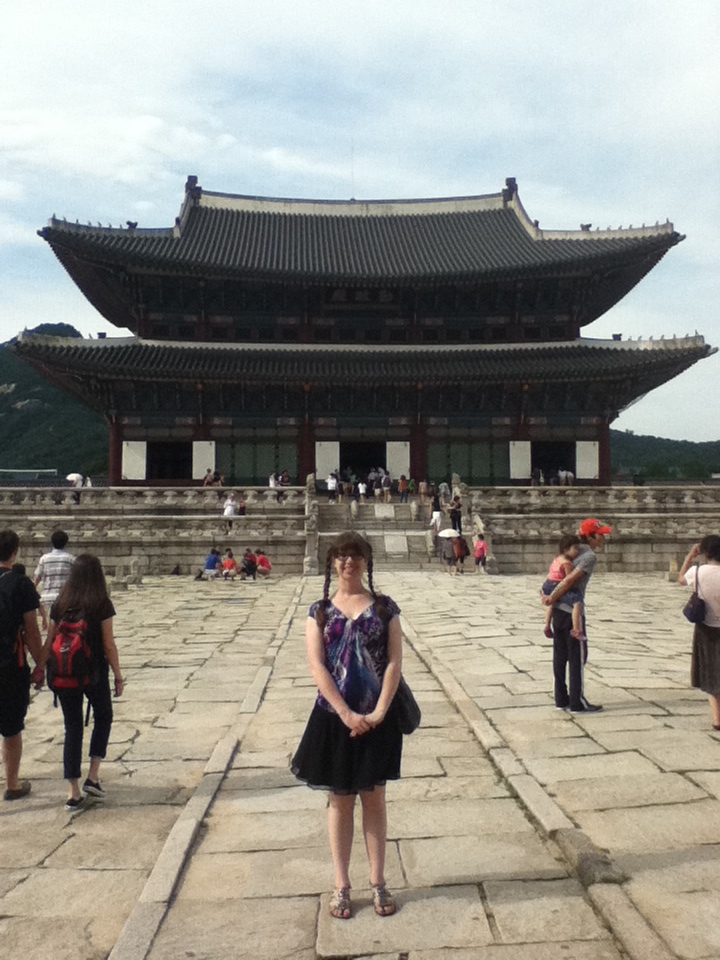
Me at the Gyeongbokgung Palace in Seoul, South Korea. Note my whimsical attire.

I don’t know if you remember, but a few weeks back I wrote a post about my super awesome book editing kick-off party. Three weeks later (also known as yesterday), we had the book editing wrap-up party. Merriment was had, alcohol was consumed, and many suggestions were made about how to make my book the best it can possibly be. A lot of them were very specific to my book, but I thought I’d share some of the more general wisdom here with you.

1. For a traumatic event to be believable, the character’s reaction has to fit the situation. Obviously ever character will react differently to a traumatic event, but never underestimate the impact of a good emotional breakdown. Or several.

2. Use the 5 stages of grief. To remind you, those stages are: denial, anger, bargaining, depression, and acceptance. The 5 stages of grief are used in everything from high-brow literary fiction to bad TV sitcoms, and there’s a very good reason for that.

3. Blue-raspberry jello tastes delicious with cinnamon sprinkled on top.

4. Check your facts. Otherwise you run into the embarrassing situation of a reader telling you that something you wrote was totally, unbelievably wrong.

5. Your characters can’t take everything for granted. Having your character encounter an enigmatic person or a ridiculous situation and grow accustomed to the oddity is fine, but make sure they are appropriately incredulous at first. Even if it’s something as simple as them asking, “Wait, why are you helping me?”. They don’t even need to receive a response – it’s just human instinct to question what we don’t know or understand. Unless you’re writing about something non-human, in which case you can do whatever the heck you like.

6. Be careful when you write about religion. People get really worked up over religion, and you don’t want to mess with that unless you have a very good reason for doing so.

7.  Too much or too little description of the love interest is bad. You want to give just enough description to let the reader form a picture in their mind of the character, but not enough that there’s no room for them to let their imagination run free. That’s a problem that book-to-movie adaptations run into all the time. A character is way over-described in a book, like: “6 foot 3, short blonde hair, emerald green eyes, straight nosed, full lips, broad forehead, square jaw, muscular, faint scar on the shoulder blade, etc.”, and then fans get all riled up when a hipster brunette is cast in the role.

8. Don’t let conflicting opinions weigh you down. People disagree all the time, and I guarantee that they will find things to disagree about when reading your book. The best advice I can give is to listen carefully to all sides of the argument, then make an informed decision on how to proceed based on your own opinions. This might annoy the people you’re disagreeing with, but ultimately it’s your book, and you get veto power.

Once I get all my proofread copies of the manuscript back, I’ll sit down for the FINAL EDITING ROUND, because I’ve been working on this book for six years now and it’s quite about time that I get it published and move on with my literary life. If anyone has any editing advice for me before I start the FINAL EDITING ROUND, or wants to weigh in on the post, or on my whimsical outfit, I’d love to hear from you!

Around the Interwebs:

Categories: Writing | Tags: , , , , , , , | 10 Comments

Self-Publishing a Free eBook + Party Rock Cantina

Today’s topic is a very subjective one, as everyone I’ve met seems to have different opinions on releasing free eBooks. The concept of free-publishing (as I call it) is to get your name out there as an author in a format that everyone loves – free! On the flip side, as authors publishing our intellectual property that we have slaved over for years, we rankle at the idea of giving away our babies without any form of monetary compensation. Thus the debate: is it a good idea to publish a free eBook?

Why it’s a good idea:

People like free stuff. Online piracy is through the roof, with no indication that it’s going down any time soon. Odds are that if you publish a book, a good percentage of your readership will have downloaded it for free anyway. So why not take matters into your own hands and deliver it free of charge from the very start?

No one will buy a book from an unknown author. I’m not talking about indie authors, I mean authors that nobody knows about. So, logically, you need to become a known author before you publish a book. But how do you get known as an author of awesome books if you haven’t published anything? Catch 22, baby. Unless you publish free eBooks. Then you can spread your literary wings and get your name out there. People are far more likely to download something that’s free because, as I’ve already stated, people like free stuff. You don’t even have to write original fiction – several fanfiction authors I know of have had moderate success publishing original fiction using their fanfiction fanbase as a jump off point. So it’s really all about exposure, exposure, exposure.

It’s a great way to hook an audience onto a series. My mother’s rather rich, rather market-savvy friend, suggested that I release the first book in my Imminent Danger series for free. I didn’t listen to her, although perhaps I should have. Her reasoning was that if I can get lots of people to read the first one for free, they’ll be more likely to shell out a few bucks when the sequel drops. If you look at current best-sellers, the vast majority of them are part of a series. Fifty Shades of Grey, Twilight, Harry Potter, The Girl With the Dragon Tattoo, etc. You lose money at the start, but theoretically you’ll make it up in the long run.

Why it’s a bad idea:

You run the risk of being seen as just another free-eBook author. I don’t know about you, but when I see something offered for free, one of the first things that pops into my head is “What kind of quality can something given away for free really have?” It could be the greatest book in the world, but many people might have a hard time overcoming those sorts of thoughts. And the thought isn’t at all unfounded. Go to a site like Wattpad, where hundreds of thousands of authors post their books for free, and you get a sense of what I’m saying. There are a few real gems hidden there, no doubt, but the vast majority isn’t the greatest literature I’ve ever seen.

You don’t make any money. That sounds kind of haughty, but it’s true. When I was struggling over whether to self-publish with iUniverse or release the book for free, this was one of the main factors in my decision. Here’s my reasoning. Your book is your intellectual property, something you’ve poured your heart and soul into, and you deserve to market and sell it just like any other product. Sell it at a discounted price, because it’s a new book from a new author? Sure. Give free copies as part of giveaways or contests? Absolutely. That’s basic marketing strategy. But give it away for free? This is the same problem that you get when you discuss whether selling an eBook for 99 cents is too cheap. Your book is valuable. It is worth something.

There are other ways to gain fans. You don’t have to give away your book for free to get fans. What about contests and giveaways? What about social media and word of mouth? There are other ways to market yourself.

It ruins your chance for traditional publishing. I don’t know for sure about this one, but logic dictates that it’s true. Self-published authors get taken on by traditional publishers all the time. But what’s the point of a traditional publisher spending all that money releasing your book if you’ve already given it away to the entire world?

Ultimately, it comes down to personal preference.

Both publishing methods have their pros and cons. I myself am considering free-publishing a book I wrote a few years ago. It’s in a completely different universe from my soon-to-be-published Imminent Danger book, and while it’s a light, fun read, I don’t know if it has the staying potential to become a best-seller. It’s tempting to give it a good proof read and release it to the world, but as should be obvious from this post, I’m not sure if that’s such a good idea.

What do you think? Is free-publishing a viable option for self-published authors? Are the pros of free-publishing worth the cons? Have you ever free-published, and if so, was it a good experience? Did it gain you followers and friends that you wouldn’t have reached otherwise?

LMFAO goes Star Wars:

Image cred: http://www.fantasybooksandmovies.com/best-fantasy-books.html

Categories: Self Publishing | Tags: , , , , , , , , , , | 6 Comments

Free Marketing Tips eBook link

Greetings, blogosphere. Today’s post will be a short one, as I’m off to my cousin’s graduation this afternoon and then home for Father’s Day weekend.

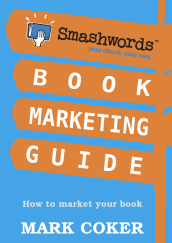
As usual, I was wandering around the internet looking for interesting things when I came upon this free eBook on Smashwords.com. It’s called Smashwords Book Marketing Guide, by Mark Coker, and it’s very informative. Basically, he goes over 33 tips on how to market your eBook. I was hesitant about downloading it, because I figured it would just be promotion for Smashwords, and it was, but it also had some pretty great ideas for marketing. I’ll share two or three of the tips below, and then I encourage you to go download the eBook. It is, after all, free!

Tip #1: Update your email signature. Your email signature is one of the most powerful marketing tools at your disposal, yet few authors take advantage of it. Most of us send emails to dozens if not hundreds of people each week, and each of these people (often friends, family, business associates, fans) represent potential customers for our book. By updating (or creating) an email signature, you’re providing email recipients a low-key, unobtrusive path to discover and purchase your book. Nearly every email program and service allows you to create a single email signature file, usually a simple text file, that then automatically appends to every email you write.

Tip #18: Invite other Authors to Post to your Blog. If you operate your own blog, invite your favorite authors to write guest posts for your blog. This is a great way to offer your fans interesting new content that increases the value of your blog. It also helps fans of the other author learn more about you.

Tip #26: Create a reader’s guide at the end of your book. You’ve probably seen these in print books: Publishers append short discussion guides for reading clubs and book groups at the ends of their books. Make it fun and easy for a book group to discuss you book. While most of us like to read books in private, we enjoy talking about books with our social circles, both online and offline. If you create a reading guide, be sure to advertise it in your book description with a simple statement such as, “Contains a helpful discussion guide for reading groups.”

Tip #27: Insert sample chapters from your other books. The last page of your book is valuable real estate. Your reader just loved your book, and they want to read more from you, so give them more book samples to read at the end of your book.

He also lists a variety of top eBook listing sites that you can put your book on for maximum exposure at the end of the document. A lot of them deal with free eBooks, but some of them list normal eBooks as well.

So check out the eBook — again, here’s the link to the site where you can download it for free.

And now for something completely different:

Categories: Self Publishing | Tags: , , , , , , , , , , | 2 Comments

When Big Time Authors Self-Publish

I just found this article at Publishers Weekly that talks about how Terry Goodkind, best-selling author of the Sword of Truth series, is self-publishing his next novel. It makes me wonder what a famous, successful author like him is doing self-publishing a book. I mean, I would probably die of happiness if I were to get traditionally published, but Goodkind is walking away from it. And the more I consider the matter, the more it makes sense. Here’s my reasoning:

1. He already has a fan following. As such, he can be pretty much assured that anything he publishes in the Sword of Truth series, people will buy, myself included.

2. He has the money for marketing/publicity. Self-published authors are generally 9-5ers trying to write on the side, and don’t have the funds to launch international marketing campaigns. But Goodkind, and other big-time authors, do have the time and money to do that kind of thing. His publishing house probably could get his book into more stores, place advertisements in better locations, but as per #1, he already has a huge fan base. They’ll find out about the book regardless of how limited the marketing campaign is.

3. He’ll get higher royalties. This one is a no-brainer. When an author self-publishes, they set the price. Traditionally published authors usually get between 5-15% royalties — good if you’re in the 15% range, terrible if you’re down at 5%. If you’re self-publishing, you obviously make way more, plus you decide how much the book goes for. I guess he’ll be losing the prestige of having a traditional publishing house’s logo on the spine of his book, but he’ll probably survive.

4. He has complete creative freedom. I’ve heard horror stories of editors ripping apart books and sewing them back together in pathetic imitations of their originals. I have no idea if this is true — probably not, let’s be realistic. However, that doesn’t change the fact that self-publishing allows you to write whatever the heck you want, regardless of what anyone else (or society in general) thinks. My only problem with this is that some authors do need to be reined in by editors, Goodkind included. He has a tendency to get very preachy, and I’m worried he’ll just go crazy with the rants once there’s no one there to stop him. Of course, for all I know, he’s been deciding what goes into his books for years, and the publishing house has just been crossing their fingers and hoping things worked out.

5. He’ll get a lot of attention for self-publishing. Traditional publishing houses are worried about self-publishing, because it cuts into their profit margins, and will do so more in the future. Once a decent amount of big time authors join the self-publishing bandwagon, I don’t see things going well for publishing houses. Since self-publishing doesn’t happen that often right now, Goodkind should get media attention for his decision to self-publish based on that fact alone, regardless of how well his book actually sells.

Looking at it this way, it seems crazy that big time authors wouldn’t try out self-publishing. On the other hand, there are many excellent reasons to stay with traditional publishers. So I guess it really comes down to individual choice.

What do you think?

Imagine you’re a big time author, and you’re planning to release a new book. Would you consider self-publishing?

Image cred: http://www.fanpop.com/spots/sword-of-truth-series/images/684599/title/cover-art-faith-fallen-photo

Categories: Self Publishing | Tags: , , , , , , , , , | 7 Comments

How do you decide what to write?

I’ve recently been having a crisis. I would call it a crisis of faith, but that seems a little overly dramatic. Let’s call it a literary crisis.

I love writing, obviously. I love to write books, especially YA books. Ideally, I’d like to write about whatever I want, and then sell enough of these books that I can quit my day job and write books for a living. But the problem is that what I like to write, and what is currently popular, do not match up.

I recently read an article which outright stated, “If you want to make money, write Vampire Erotica”. And I have to say, I was tempted. I mean, vampires are in right now. If I were to write even a semi-decent book about vampire romance, I could probably make a good amount of money. But is that the sort of thing I want to do? And I’m not talking about sacrificing my integrity as an author. I mean, do I want to put myself through the process of dreaming up a story about vampires and humans and werewolves and all the other literary tropes that are selling right now? The answer is: I don’t know.

Money rocks. But so does writing what I care about. And I’m not sure I could care about vampires. I love Buffy the Vampire Slayer, and I quite enjoyed Twilight, but that was less because of the vampires and more about the characters. Everything I know about vampires is from TV and books, and most of that information contradicts itself. The original vampire looked like a demon, after all–hardly something you want your main character locking lips with. I suppose if I came up with interesting enough characters I wouldn’t mind churning out a vampire romance, but for all I know, by that point society will have moved on to the next YA craze, and I’ll be left with a vampire romance that no one will want to buy or read.

Maybe that’s the way to look at it. YA crazes come in phases, and ultimately, you should write what you want to write. Even if the book doesn’t have an audience now, it might very well in a year or two. I guess it comes down to whether you’re writing for love of writing, or for love of making money. And if I’m writing for the second reason, I might as well throw in the towel now, because the best sellers are non-fiction, and I am worse than useless at writing anything other than fantasy or sci-fi. So I’m going to keep on typing what I know and love, and hopefully I’ll be able to find an audience out there someday to appreciate my creations!

What do you think?

Is it important to consider potential sales and marketability when writing a book? Should a real writer care whether or not they make the New York Times Best-seller List?

Categories: Writing | Tags: , , , , , , | 12 Comments

10 Things I’ve Learned About Editing

  1. Spell check is not optional. You can read over your manuscript three dozen times, and you still won’t catch all the typos. Guaranteed.
  2. Dialogue rocks. So does describing the setting. If you forget where your characters are, don’t go back and check to remind yourself. Add more setting description. If you forget, so will your readers.
  3. Commas are useful, but often not necessary. If you have more than three commas in a sentence that does not include a list, they’re not necessary.
  4. Sci-fi and fantasy allow you to break the laws of physics. But when you break the laws, everything still has to make sense and be consistent. If it doesn’t, you’re compromising the integrity of your world.
  5. Don’t capitalize unless you absolutely have to. The most annoying thing in the world is to read a sentence like this: “Then Antiloch, Son of the Desert Guru, rode forth on his mighty Andalarian Prancer to aide the Chandoran Sages in their Abolition of the Tyrant King Zandif of Kardovak.”
  6. Tightening your phrasing is good. Cutting out a great sentence for the sake of tightening your manuscript is not. Be careful with what you cut and what you keep.
  7. You’re the writer, no matter what your editor thinks. If you like something, then keep it in the manuscript. But figure out why your editor wants you to cut it first, just in case they’re right.
  8. When you read something and think, “This sounds a bit weird, but I don’t really want to change it”, change it. It will sound weird to your reader too, and they will enjoy the book less because of it.
  9. If your editor asks you why a character does something and you don’t know, figure it out.
  10. Editing is work, but it also has to be fun. If you want to bash your head against the desk, stop editing! Unless you have a deadline. Then you should probably keep going.
Categories: Writing | Tags: , , , , , , | 4 Comments

Book Editing Bash + Reality Show on Mars?


So I haven’t posted in a while because I am, once again, editing my novel Imminent Danger and How to Fly Straight into It. I had to drop everything for pretty much the entirety of last week in order to slog through the 120k words of the story. My deadline? Sunday, 4pm, because it was at that time that the first annual Book Editing Bash was set to commence. I know what you’re thinking — “Oh god, did she make it? Did she finish editing in time? The horror!” Stop panicking. I made it. You can relax.

My good friend Kaleigh printed off nine spiral-bound copies of the book for me, and I then had a handful of friends over to my apartment for the Book Editing Bash. What, you might ask, is the Book Editing Bash? Basically, I’m going to send my manuscript in to iUniverse very soon, and I wanted to make sure that all grammatical mistakes, logical flaws, spelling inconsistency, etc. were purged from the document before submission. So I thought, how can I entice people into proof reading my book? Hence the Book Editing Bash.

It was incredibly fun. I whipped up a bunch of alien-themed snacks and beverages for my guests to munch on while they lounged on the sofas/armchairs and edited my book. Some of my favorite snacks included the Rice Ssrisk-y Balls, Jsgarn Eggs, and the five-decker sandwich whimsically entitled “The Approach to Alpha Centauri Prime”. For drinks we had Saluzan Sunrises and Black Eye Whiskey. The whiskey was actually just Dr. Pepper, so several of my guests added rum to make it more whiskey-like. Less editing was done once the alcohol started flowing.

As you can see in the picture, red pens were provided with each copy of the manuscript, as were sticker sheets with sparkly smiley faces. I told my friends to stick one of the smiley faces whenever they got to a part that made them laugh out loud. Most people loved the idea, and others, like my brother, scoffed and said that he would stick to red pen. Fine, Jesse, but don’t come crying to me when your manuscript is the least sparkly of the lot.

All in all, the Book Editing Bash was a great way to get people together and excite them about reading/editing my book. It cost perhaps $250 overall — that would be for food and printing costs — but it was well worth it. Within the next two weeks I should have nine marked-up manuscripts in my hands, and be well on my way to producing a final, fully edited, marketable book. Huzzah!

Reality Show on Mars?

Okay, when I first saw this pop up on my Facebook news feed, I thought I was crazy. But it’s true. Basically, a Dutch company has a plan to put a permanent settlement on Mars by 2023. Even crazier, they are going to make the settlement into a reality TV show. As in, these people will not only be living in tiny little pods on MARS, they will have every second of their lives recorded on camera and broadcast to the entire world via a live, 24/7 internet stream.

They will start auditions in 2013, where they will choose four men and women to be on the first flight to Mars. They will then go into the desert and train for ten years, and then blast off in 2023. After that, the company (called Mars One) will send up four colonists a year until 2033. That makes 40 people living on Mars within the next 20 years! And like I said, this is a permanent settlement — as in, no going back once you’re there. Has anyone ever read the book Legacy of Herot? This reminds me a lot of that book. I just hope the Mars colonists have better than the Herot colonists.

Read more about Mars One here and here.

What do you think?

If you were offered the chance to go live on Mars for the rest of your life, would you take it? I can’t even imagine living permanently in what basically amounts to a windy, cold desert… but then, this is MARS we’re talking about. Maybe it would be worth it. Although if you got into trouble, help would be a long, long way away.


Categories: My Works | Tags: , , , , , , , , , | 2 Comments

2012 Contests for Self-Published Authors

I’ve recently been doing research into contests for self-published authors, and I now share them here with you! Obviously I can’t enter any of them, as my book is still in the editing stage, but hopefully someone out there will find these links helpful.

Click the title of the contest to go to their website. They are listed in order of entry deadline.

Disclaimer: Scam contests have been known to operate. These links are for reference only. If you decide to enter one of these contests, double-check that they are legitimate before sending your money!

2012 New York Book Festival

  • Deadline: June 1, 2012
  • Prize: $1,500, flight to New York for the awards ceremony
  • Cost: $50 per entry
  • Categories: all genres

Writer’s Digest 20th Annual Self-Published Book Awards

  • Deadline: June 15, 2012
  • Prize: $3,000, national exposure, paid trip to Writer’s Digest Conference
  • Cost: $100 for first entry, $75 for additional entries
  • Categories: all genres

Hollywood Book Festival

  • Deadline: June 25, 2012
  • Prize: $1,500, flight to LA for the awards ceremony
  • Cost: $75 per entry
  • Categories: all genres

Moonbeam Children’s Book Awards

  • Deadline: August 31, 2012
  • Prize: site is unclear – potentially national exposure
  • Cost: $75-$95 per entry
  • Categories: children’s literature

2012 Anderbo Self-Published Book Award

  • Deadline: October 15, 2012
  • Prize: $500, announcement and publication of book excerpt on Anderbo website
  • Cost: $20 per entry (“reading fee”)
  • Categories: fiction or non-fiction

Happy writing/entering! Also, let me know if you do enter, so I can wish you good luck!

Funny and relative comic: click here.

Categories: Self Publishing, Writing | Tags: , , , , , , , | 1 Comment

Blog at WordPress.com.